



What is KeraFirm Pro?
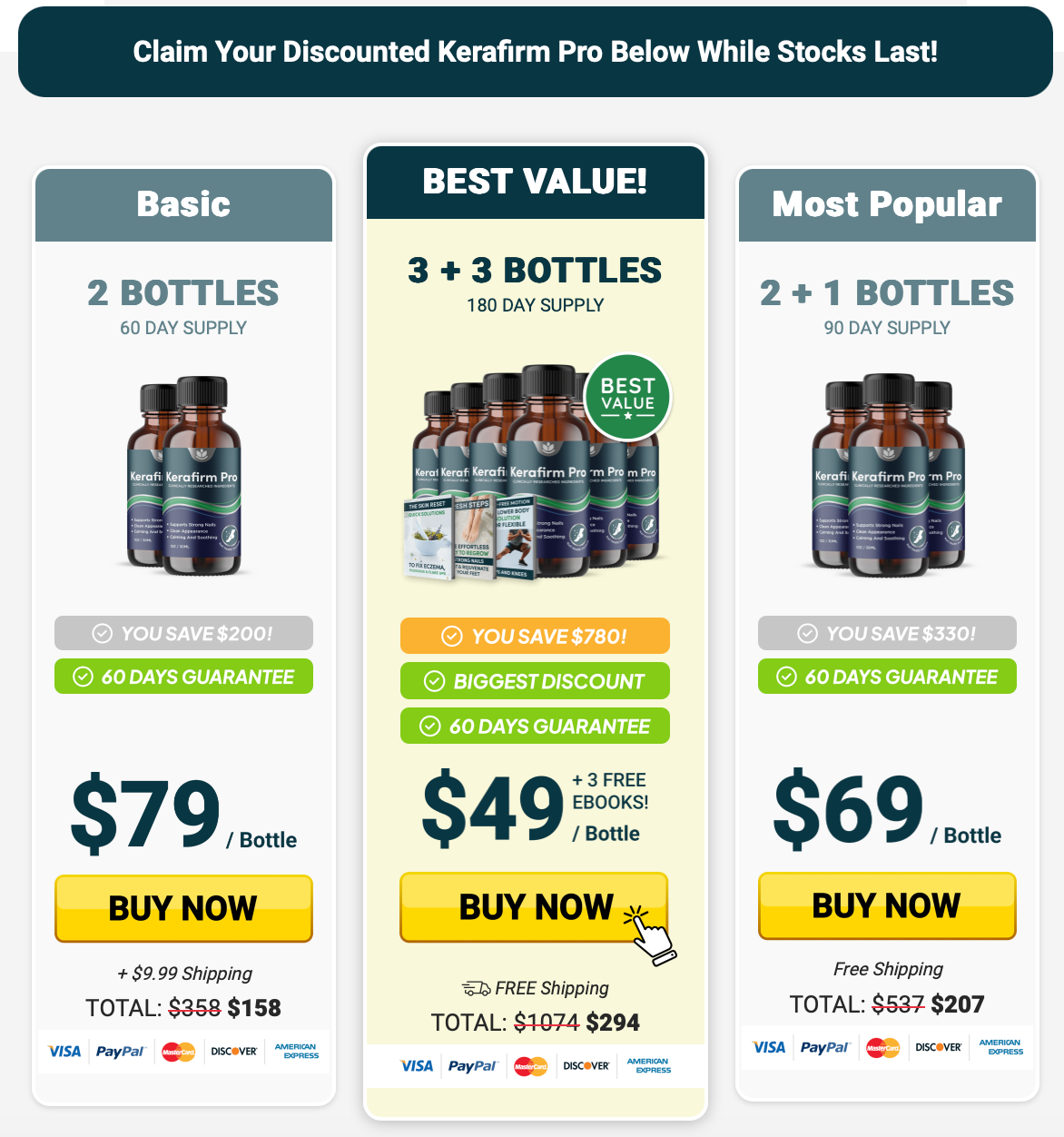
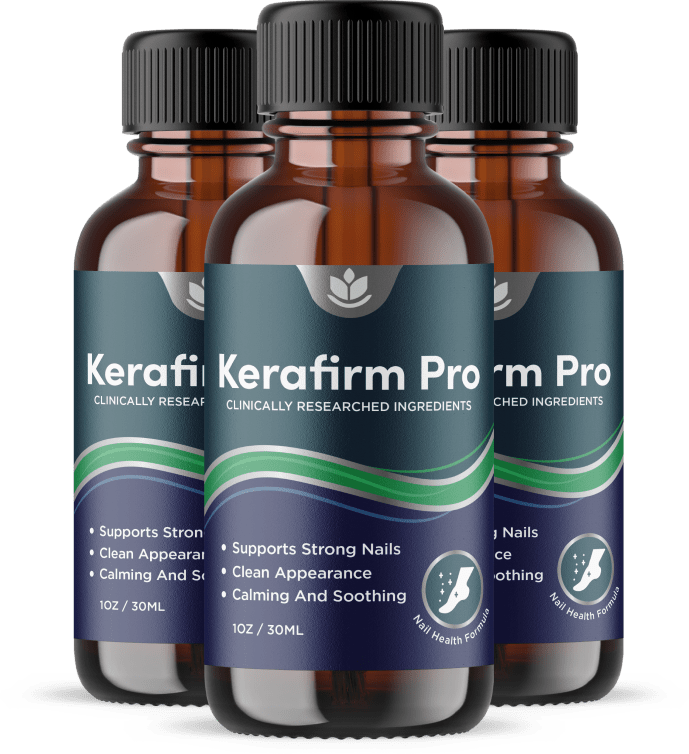
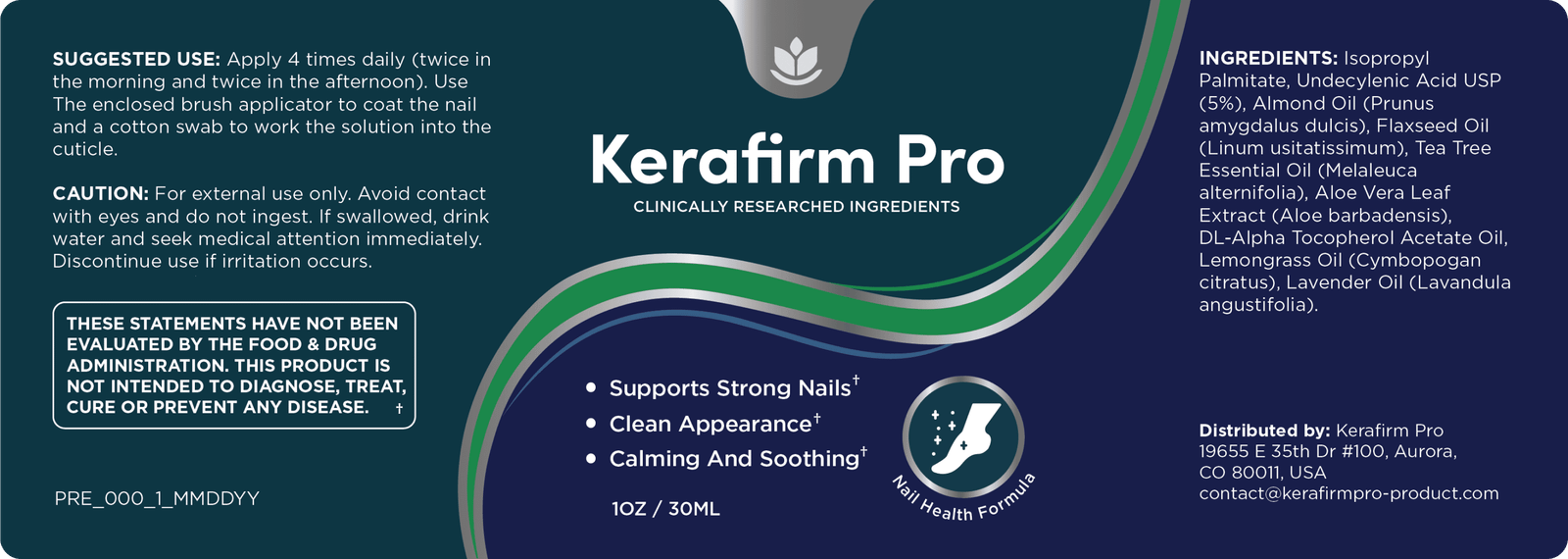
KeraFirm Pro is sold as a topical nail and cuticle formula applied with a brush rather than swallowed. Current merchant materials describe a 1 fl oz / 30 mL bottle and direct users to apply the formula to the nail repeatedly during the day. Those are product-identification and usage facts supplied by the seller. They should be kept separate from the medical question of whether the product has been shown in controlled human studies to eliminate a fungal nail infection.
This distinction matters because onychomycosis is a diagnosis, not simply a visual description. Thickening, discoloration, crumbling and nail separation can also occur with nail psoriasis, trauma and other disorders. The American Academy of Dermatology notes that clinicians may examine nail material under a microscope because another nail condition can look like fungus. A product review should therefore avoid treating appearance alone as proof that a fungal infection is present.
What does the current printed label say?
The label material reviewed for this project identifies isopropyl palmitate, undecylenic acid USP at 5%, almond oil, flaxseed oil, tea tree essential oil, aloe vera leaf extract, DL-alpha tocopherol acetate (vitamin E), lemongrass oil and lavender oil. Merchant promotional material also names additional botanicals such as clove, manuka, camphor, menthol, walnut and chia. Because those lists are not identical, MPS treats the printed label as the stronger product-specific source and flags the difference.
Evidence rule: a formula fact tells us what is in a product. It does not tell us that the finished product produces a clinical outcome.
How should undecylenic acid 5% be interpreted?
Undecylenic acid is recognized in the FDA OTC topical-antifungal monograph framework, but concentration and labeling matter. FDA Monograph M005 lists undecylenic acid and related undecylenates at a total concentration of 10% to 25% for monograph topical antifungal drug products. KeraFirm Pro's current printed label reports undecylenic acid USP at 5%.
The presence of a familiar antifungal ingredient therefore does not make every product containing it equivalent to a monograph-compliant antifungal drug, and it does not establish that a lower-concentration multi-ingredient formulation has the same clinical performance. MPS treats 5% as a product fact and the FDA monograph as regulatory context, not as a shortcut to an efficacy claim.
What does the tea tree oil evidence show?
A randomized double-blind multicenter trial published in 1994 enrolled 117 participants with culture-confirmed distal subungual onychomycosis and compared twice-daily 100% tea tree oil with 1% clotrimazole solution for six months. Culture cure was low in both groups, while partial or full clinical improvement was reported in roughly six in ten participants.
That study is useful ingredient-level context, but it does not test KeraFirm Pro. The concentration, formulation and combination of ingredients differ. NCCIH states that only a few studies have examined tea tree oil for fungal nail infections and that the amount and quality of research are insufficient for conclusions. This is the appropriate evidence boundary for a KeraFirm review.
How does KeraFirm compare with established treatment evidence?
Dermatology guidance describes prescription topical medicines, oral antifungals, nail-thinning strategies and clinician-directed procedures. Some prescription topical products are used for many months because nails grow slowly. Oral treatment may require medical monitoring and can carry systemic risks. These options should not be presented as interchangeable with a consumer brush-on product simply because both are used around abnormal-looking nails.
AAD also notes that lasers are not FDA approved to treat the fungal infection itself and that small studies of tea tree oil and mentholated ointment are not enough to establish effectiveness. That wider treatment context shows how high the evidence bar is when a claim moves from cosmetic nail support to treatment of a diagnosed fungal disease.
What are the main safety considerations?
KeraFirm Pro is a topical product and current merchant material instructs external use. Botanical oils and other topical ingredients can irritate sensitive skin in some users. Follow the current label, avoid ingestion and eye exposure, stop if irritation occurs, and seek professional advice when the surrounding skin is inflamed, painful or infected.
People with diabetes, impaired circulation, immune suppression or significant foot problems should be especially cautious about self-treating persistent nail changes. The concern is not a known KeraFirm-specific complication, but the greater consequence of delayed diagnosis or injury in higher-risk populations.
What can this review conclude today?
KeraFirm Pro has a clearly identifiable topical format, a current printed ingredient label and ingredients with plausible or limited research context. That is enough to perform a useful formula and evidence review. It is not enough to say that the finished product has been clinically demonstrated to treat or cure onychomycosis.
The evidence is therefore layered: the label can be evaluated as a product fact; undecylenic acid has relevant regulatory context but the listed 5% concentration is below the FDA monograph's 10–25% range; tea tree oil has limited human evidence but remains inconclusive; and no qualifying finished-product clinical trial was identified for KeraFirm Pro during this review. Merchant testimonials, discounts and guarantees do not change those evidence limits.
Where should a reader go next?
For broader nail-fungus education, treatment options and ingredient explainers, use the independent KeraFirm research site. For current pricing, packages, shipping and purchase-route questions, use the commercial KeraFirm site or the merchant offer directly. As the MPS KeraFirm cluster expands, its ingredient, safety, trial-verification and nail-fungus evidence pages will remain focused on distinct research questions rather than repeating this master review.
Research domain
Generic nail-fungus and ingredient research →
Generic nail-fungus and ingredient research →
Commercial domain
Packages, price and buying-route information →
Packages, price and buying-route information →