



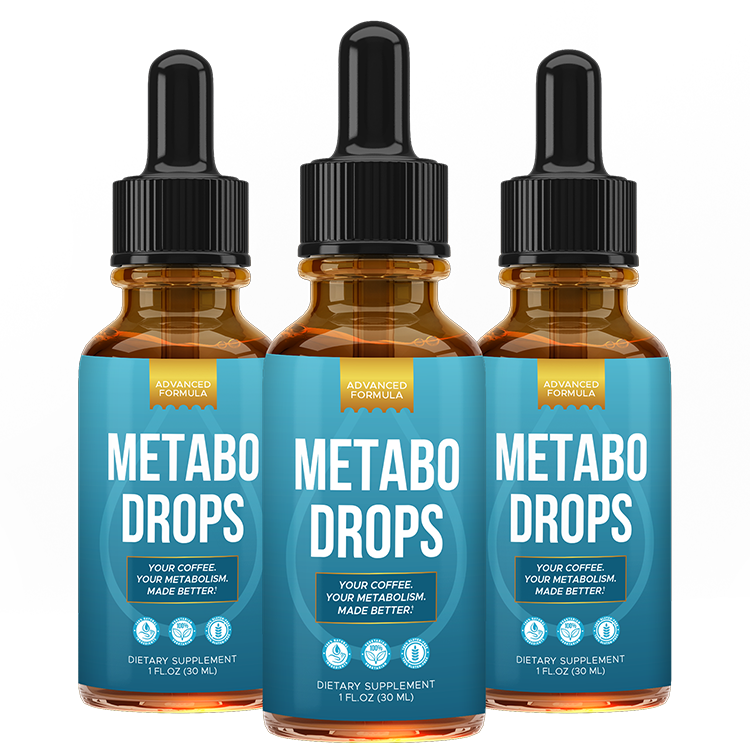
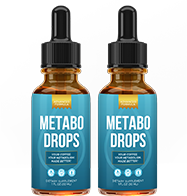



What exactly is Metabo Drops?
Metabo Drops is marketed as a liquid nutritional serum intended to be added to coffee. The merchant positions the product around metabolic support, energy, appetite and weight-management goals, with the practical selling point that users can add it to an existing beverage routine rather than taking another capsule or preparing a separate shake.
That format may be convenient, but convenience and efficacy are separate questions. The scientific assessment of a supplement depends on its exact formulation, the amount and form of each active ingredient, the population in which those ingredients have been studied, and whether the finished commercial product has direct evidence of its own.
Direct answer: Metabo Drops is best understood as a coffee-added supplement whose commercial rationale draws on coffee/caffeine physiology and metabolic-support ingredients. The available research should be interpreted at those individual evidence levels rather than as automatic proof of the finished formula.
How is Metabo Drops intended to work with coffee?
The product proposition combines a habitual beverage with a liquid supplement. Coffee itself contains numerous bioactive compounds, including caffeine and chlorogenic acids, and has been studied extensively in relation to energy metabolism and cardiometabolic outcomes.
The merchant's concept is that adding the serum to coffee provides a convenient delivery routine while complementing coffee's existing biochemical profile. That is a plausible commercial concept, but biological plausibility is not equivalent to demonstrated clinical effectiveness.
A stronger way to evaluate the idea is to work through an evidence ladder: first assess coffee research, then caffeine and coffee bioactives, then each supplement ingredient, then whether the product's disclosed formula matches studied forms and doses, and finally whether the finished formulation has direct clinical evidence.
What does research show about coffee and metabolism?
Coffee is a chemically complex beverage rather than a single active ingredient. Human research has examined it in relation to glucose metabolism, body composition, cardiometabolic markers, energy intake and other outcomes.
In a population-based analysis of 2,264 adults from the Northern Finland Birth Cohort, higher habitual coffee-intake groups showed lower total and visceral fat and higher skeletal muscle mass, while BMI was broadly comparable across intake groups. Coffee intake also showed associations with circulating metabolites and, in men, several glucose-insulin measures.
The study was cross-sectional. That means it can identify associations, but it cannot establish that drinking more coffee caused the observed body-composition or metabolic differences. The authors explicitly called for longitudinal and intervention research to establish causality.
Practical interpretation: Habitual coffee intake has been associated with several metabolic and body-composition markers in human research, but those associations should not be rewritten as proof that coffee itself causes fat loss.
Coffee, caffeine and fat oxidation
Caffeine has been studied for acute effects on energy expenditure and fat oxidation, including during exercise. Such findings are scientifically relevant to the broader metabolic-support discussion, but they answer a narrower question than whether a commercial supplement produces long-term fat loss.
It helps to separate three concepts. Acute fat oxidation refers to a temporary change in the proportion of fuel coming from fat. Energy balance concerns the relationship between energy consumed and energy expended over time. Long-term fat loss is a sustained reduction in stored body fat. A change in the first does not guarantee the third.
That distinction matters when evaluating language such as “fat-burning.” A supplement can be associated with a plausible mechanism without having direct clinical evidence for sustained weight reduction.
Metabo Drops ingredients and the evidence behind them
The supplied merchant material describes Metabo Drops as a proprietary nutritional serum and associates the formulation with ingredients used in metabolic-support products. The accessible source material available for this build does not provide a sufficiently reliable full Supplement Facts panel with exact quantities that can be reproduced without risk of error.
For that reason, this page does not invent dose amounts. The correct evidence process is to verify the complete label and then compare each disclosed ingredient's exact form and amount with the human research.
| Evidence question | What should be checked |
|---|---|
| Ingredient identity | Exact ingredient, extract or chemical form shown on the current label. |
| Amount | Actual amount per serving rather than a generic ingredient mention. |
| Human research | Population, form, dose, duration and endpoint studied. |
| Formula match | Whether the product provides a comparable form and amount. |
| Finished product | Whether Metabo Drops itself has been tested in a relevant controlled study. |
This distinction prevents a common supplement-review error: taking evidence about an ingredient in isolation and treating it as proof of the complete commercial formula.
Does the complete Metabo Drops formula have direct clinical evidence?
No peer-reviewed randomized clinical trial of the complete finished Metabo Drops formulation was identified in the research material supplied for this project.
That does not prove that no user can benefit from the product. It means the strength of a product-specific efficacy claim should remain lower than the strength of evidence available for any well-studied underlying ingredient or mechanism.
| Evidence layer | Assessment |
|---|---|
| Coffee and metabolic physiology | Moderate contextual evidence |
| Caffeine and acute fat oxidation | Moderate for specific acute endpoints |
| Coffee/body-composition associations | Observational evidence |
| Finished Metabo Drops formula | Insufficient direct evidence identified |
Metabo Drops and weight management
Weight management is influenced by energy intake, activity, sleep, diet quality, medications, health conditions and numerous behavioral and biological factors. A supplement may be considered as one part of that larger picture, but it should not be treated as a substitute for the factors that have the greatest influence over time.
For Metabo Drops, the scientifically defensible position is that the coffee-use concept and individual ingredients can be evaluated against published metabolic research. What the supplied evidence does not establish is a guaranteed amount of weight loss from the finished product.
A buyer who understands that distinction can assess the product more realistically: as a convenient supplement format with a plausible metabolic-support rationale, rather than as a proven replacement for broader weight-management behaviors.
Safety, caffeine exposure and side effects
Because Metabo Drops is intended to be taken with coffee, the user's total caffeine exposure remains relevant even if caffeine is not the primary active component of the drops themselves. People vary substantially in caffeine tolerance.
Those who experience sleep disruption, anxiety, palpitations, gastrointestinal discomfort or pronounced jitteriness from coffee should consider the beverage component separately from the supplement.
Individual circumstances also matter for people using prescription medication, taking multiple supplements, managing cardiovascular or metabolic conditions, or who are pregnant or breastfeeding. A clinician or pharmacist can help assess interactions and suitability when those factors apply.
Coffee preparation can also influence its biochemical profile. Unfiltered coffee can retain more diterpenes than filtered coffee, which is relevant to lipid-related outcomes. That is another reason the phrase “coffee is good for metabolism” is too broad to serve as a complete safety or efficacy statement.
What about manufacturing and quality claims?
The merchant material uses quality-oriented language around manufacturing and product attributes. Such statements should be displayed as independent badges only when the supporting documentation can be verified.
One distinction is particularly important: a dietary supplement should not be described as an “FDA-approved product” merely because it is manufactured in a facility that is registered with or regulated by the FDA. Facility status and product approval are different concepts.
For the same reason, labels such as non-GMO, GMP, gluten-free, vegetarian or Made in USA should be tied to current documentation rather than copied as decorative trust badges without verification.
Reviews, testimonials and complaints
Customer feedback can be useful for evaluating service and usability: whether the ordering process was straightforward, whether packages arrived, whether the liquid format was convenient, whether customers liked using the product with coffee, and how refund requests were handled.
Testimonials are much weaker evidence for clinical questions. A personal report cannot establish that the product increased metabolism, caused fat loss or produced a specific health outcome because testimonials lack randomization, control groups, blinding and objective outcome measurement.
The practical approach is therefore to treat reviews as experience signals while relying on independent research for questions of efficacy and safety.
Metabo Drops price, packages and purchase route
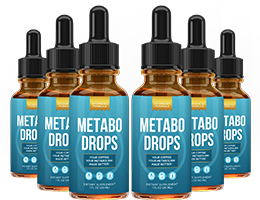
The supplied merchant offer presents three package sizes: 2 bottles, 3 bottles and 6 bottles. The largest package is positioned at the lowest listed per-bottle price and includes free shipping in the supplied offer artwork.
Commercial information can change more quickly than scientific evidence. Before ordering, confirm the current package total, shipping charge, delivery eligibility, refund conditions and whether the formula or label has changed.
Check the current label
Confirm serving instructions and complete ingredient information.
Confirm serving instructions and complete ingredient information.
Check the package total
Verify the final amount before payment rather than relying on an older screenshot.
Verify the final amount before payment rather than relying on an older screenshot.
Check shipping
Delivery timelines can differ by destination.
Delivery timelines can differ by destination.
Check refund terms
Read the merchant's current return conditions and exclusions.
Read the merchant's current return conditions and exclusions.
Evidence-based takeaway
Metabo Drops has a clear practical proposition: a liquid supplement intended to fit into a coffee routine rather than introducing another capsule, shake or powder.
There is legitimate scientific research on coffee, caffeine and metabolic physiology. Human studies have examined coffee in relation to body composition, glucose-insulin markers, energy intake and acute substrate use. The evidence is not uniform, and observational findings should not be interpreted as proof that coffee causes weight loss.
The key limitation is product-specific evidence. The supplied research does not establish that the complete Metabo Drops formulation has itself been proven in a randomized clinical trial to deliver the strongest metabolic or fat-loss outcomes used in merchant advertising.
A reasonable buyer position is therefore positive but measured: Metabo Drops may appeal to people who already drink coffee, prefer a liquid format, understand that ingredient-level evidence differs from finished-product evidence, and are comfortable evaluating it as a supplement rather than a guaranteed weight-loss solution.